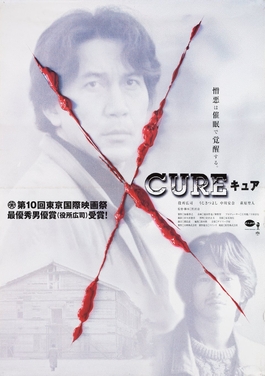
The Existential Dread of Cure (1997): A Psychological Horror Analysis
Kiyoshi Kurosawa's Cure (1997) isn't just a film; it's a chilling descent into the fragile landscape of the human mind. Often hailed as a foundational pillar of the modern J-horror movement, this Japanese psychological horror thriller distinguishes itself not through jump scares or gore, but through an insidious slow-burn tension, a pervasive atmosphere of unease, and a profound exploration of existential dread. For cinephiles drawn to psychological disintegration, philosophical horror, and narratives that revel in ambiguity, Cure 1997 is an essential, unforgettable experience.
Set against the backdrop of a seemingly ordinary Tokyo, the film pulls back the curtain on the unsettling ease with which sanity can unravel, and the terrifying prospect that the darkest impulses might lie dormant within us all, awaiting a catalyst. It's a masterful study in how an idea, a mere suggestion, can become a viral, destructive force, raising profound questions about identity, free will, and the very nature of evil.
Unraveling the Enigma: The Case of the X-Mark Killings
The narrative of Cure 1997 plunges viewers directly into a baffling series of brutal murders plaguing Tokyo. Detective Kenichi Takabe, brilliantly portrayed by Kōji Yakusho, finds himself at the forefront of an investigation that defies conventional criminal logic. Each victim is discovered with a large 'X' carved into their throat, a gruesome signature that points to a chilling commonality. Yet, the perpetrators themselves are astonishingly diverse: ordinary citizens with no prior criminal records, no discernible motive, and no connection to each other or their victims.
What truly elevates the horror is the state of these killers post-crime. They are calm, cooperative, and utterly oblivious to their monstrous actions. Their dissociative states suggest a profound mental break, as if they were puppets controlled by an unseen hand, or perhaps, simply vessels for an idea. This absence of clear motive and the perpetrators' blank demeanor immediately set Cure apart from standard detective thrillers. Takabe isn't just looking for a killer; he's searching for the *source* of a psychological contagion, a deeper truth that lies beyond the physical act of murder. This early establishment of an inexplicable, almost supernatural, element grounds the film's psychological horror, making the mundane surroundings feel increasingly menacing.
Mamiya: The Architect of Madness
As Takabe's investigation deepens, a central, enigmatic figure emerges: Mamiya, a drifter played with unsettling detachment by Masato Hagiwara. Mamiya presents himself as a young man suffering from extreme short-term memory loss, repeatedly asking "Who are you?" and "Where am I?" only to seemingly forget the answers moments later. His vacant stare and repetitive questions are initially frustrating, yet underneath this facade of harmless amnesia lies something far more sinister. Mamiya becomes the prime suspect, not as the direct killer, but as the orchestrator, a puppet master employing a chilling form of psychological manipulation, akin to hypnosis, to compel ordinary people to commit heinous acts.
Mamiya is less a character and more a philosophical problem, a mirror reflecting the inherent vulnerabilities of the human psyche. He doesn't coerce with threats; instead, he subtly probes, planting suggestions, stripping away the social constructs and personal identities that prevent individuals from succumbing to their primal urges. His power isn't magic, but an uncanny ability to exploit fundamental human insecurities and suppressions. The genius of Cure 1997 lies in never fully explaining Mamiya's abilities, leaving viewers to ponder whether he possesses a supernatural gift, or if he has merely mastered the art of unlocking the darkest corners of the subconscious that already reside within everyone. This ambiguity fuels the film's profound existential dread: if Mamiya can do this, what's stopping anyone else from becoming a catalyst, or a victim?
The Erosion of Sanity: Takabe's Descent
Kiyoshi Kurosawa masterfully intertwines the unfolding investigation with Detective Takabe's increasingly fragile personal life. Takabe is already a man on the brink; his wife is battling a debilitating mental illness, and the weight of his responsibilities is visibly eroding his composure. This pre-existing vulnerability makes him a particularly susceptible target for Mamiya's insidious influence, even from a distance. The more time Takabe spends interrogating Mamiya, the more his grip on reality begins to fray. He experiences disturbing lapses in memory, moments of disorientation, and a growing paranoia that blurs the lines between his professional duties and his personal disintegration.
This descent is the beating heart of Cure 1997's psychological horror. The film asks us to wonder: Is Takabe solving a case, or is he inadvertently becoming part of it? His journey into the heart of the murders is not just an external quest for justice, but an internal battle against the corruption of his own mind. The film brilliantly cultivates a sense of existential dread by making the viewer question Takabe's sanity alongside him. Kurosawa's slow-burn approach, relying on prolonged takes, minimal non-diegetic music, and an oppressive atmosphere, effectively translates Takabe's inner turmoil into a visceral experience for the audience. We feel his mounting despair, his growing inability to distinguish truth from suggestion, making the horror deeply personal and profoundly unsettling.
The Chilling Aftermath: A Contagious Curse and the "Cure" of Identity
The climax of Cure 1997 sees Takabe finally confront Mamiya in an abandoned hospital, a scene charged with philosophical weight rather than explosive action. Mamiya, with chilling calmness, suggests that his hypnotic abilities are not simple tricks, but a fundamental manipulation of the human subconscious, unlocking a primal urge to kill that exists within everyone. After a tense, unsettling attempt by Mamiya to hypnotize him, Takabe shoots and kills him, seemingly bringing the horrific spree to an end.
However, this is precisely where the true terror of the film takes its most sinister turn. The final scenes are deceptively mundane: Takabe sits in a restaurant, appearing calm, eating his meal. A waitress receives a phone call, and after hanging up, her expression shifts. With a terrifyingly placid demeanor, she walks towards the kitchen, picks up a large knife, and disappears off-screen. The film ends, leaving viewers with a gut-wrenching realization.
The implication is horrifyingly clear: the "curse" or the ability to awaken primal destructive urges was not confined to Mamiya. Takabe, through his intense exposure and psychological battle, appears to have absorbed or learned the technique, becoming the new "carrier." The Cure (1997) Ending Explained: Decoding Kurosawa's Chilling Ambiguity reveals that the "cure" is not an antidote to the madness, but perhaps a release from the constraints of identity itself, allowing the base instincts to surface. This suggests that the darkness is not an external evil, but an inherent, transmissible potential within humanity. This makes Cure 1997 not just a film about a serial killer, but a commentary on the fragility of societal order and the frightening ease with which human nature can be corrupted. It’s a compelling reason why Cure (1997): Kiyoshi Kurosawa's Foundational J-Horror Masterpiece continues to resonate deeply.
Conclusion
Kiyoshi Kurosawa's Cure 1997 remains a towering achievement in psychological horror, a film that digs its hooks not into your fears of ghosts or monsters, but into your deepest anxieties about identity, control, and the inherent darkness within the human psyche. Its slow-burn brilliance, combined with masterful performances and an almost unbearable atmosphere of dread, cemented its place as a groundbreaking work in J-horror and a timeless classic of global cinema. It’s a film that refuses easy answers, preferring to leave its audience to grapple with unsettling questions long after the credits roll, proving that the most terrifying horrors are often those that reside within ourselves.